How To Know If You Have Hard Water: 6 Signs to Check Today
Cloudy glassware, crusty faucets, and soap that will not lather. Here are the six signs of hard water, how to…


Every year, water utilities across the country publish a Consumer Confidence Report, also called a CCR. This report details exactly what is in the water they deliver. It is not marketing material. It is a disclosure required by the Safe Drinking Water Act, reviewed against strict legal limits set by the EPA. For homeowners in Vancouver, WA, these reports are public. They answer the safety question, such as is tap water safe to drink, directly without guesswork.
This article walks through what the most recent reports actually say. That includes one topic worth being upfront about: PFAS.
Vancouver has its own water utility. The City of Vancouver’s Public Works department tests the water delivered to most Vancouver addresses. It also publishes its own annual report. This is a separate system from Clark Public Utilities. Clark Public Utilities provides water to Hazel Dell, Salmon Creek, and unincorporated areas of north Clark County. The two are sometimes confused, but they draw from different sources and are tested separately. This article focuses on the City of Vancouver Water Utility’s 2024 report.
Vancouver’s drinking water comes entirely from groundwater. It is drawn from three underground aquifers: the Orchards, Troutdale, and Sand-and-Gravel aquifers. The city tests for more than 238 substances each year. That is well beyond what federal law requires.
According to the 2024 report, every regulated contaminant detected came in below its legal limit:
Lead testing in 2023 checked 54 homes. The average result was 2.2 parts per billion. The legal action level is 15 parts per billion. None of the tested homes went over that level. Lead is not present in Vancouver’s source water at all. When lead does show up at a tap, the report says it comes from old household pipes, not from the water supply itself.
The report also lists water hardness between 79 and 140 ppm. That number is useful if you are researching whether a softening system makes sense for your home.
In 2024, the EPA set new national rules for six types of PFAS. PFAS are man-made chemicals. They show up in things like non-stick pans and food packaging. People have used them since the 1940s. PFAS break down very slowly. That is why people call them forever chemicals.
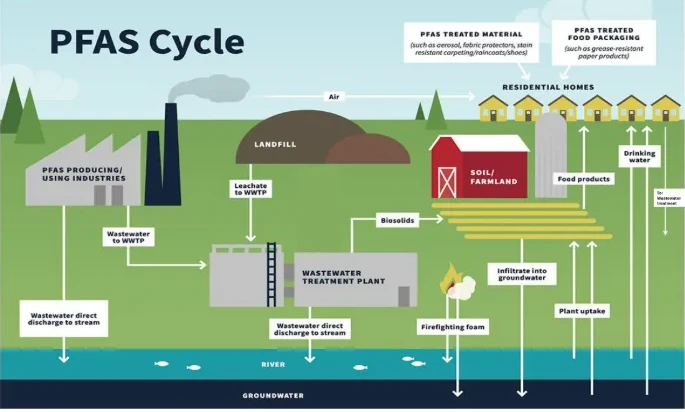
Vancouver’s own report shows that testing in 2024 found eight of the city’s nine wellfields above the new EPA limits for at least one PFAS compound. This is disclosed directly in the city’s own report, not something uncovered elsewhere. Vancouver has tested proactively for PFAS since 2020. Regular compliance testing began in 2023. The city is now building a $12.5 million treatment upgrade using granular activated carbon filtration, funded partly by a state loan. Construction started in 2025 and should continue through 2027. The city is working toward the EPA’s 2029 compliance deadline.
This is not a problem unique to Vancouver. PFAS contamination affects thousands of water systems nationwide as testing and regulations catch up with decades of prior use. Vancouver’s response says a lot: proactive testing since 2020, public disclosure, and a funded treatment plan already under construction. That is how a well-run utility handles a genuinely difficult, emerging contaminant.
The Washington State Department of Health has some specific advice. Pregnant or breastfeeding individuals, or anyone mixing infant formula with tap water, should consider an alternative water source or a home filtration system certified to reduce PFAS. This advice applies during this transition period while treatment upgrades are underway. Boiling water will not reduce PFAS levels.
Based on what these reports actually show, yes. Tap water in Vancouver meets or exceeds every current federal and state safety standard for regulated contaminants. That is a factual answer, not a sales pitch. PFAS is the one area genuinely still in progress and Vancouver is handling it publicly and proactively, rather than waiting for a mandate to act.
Homeowners who want more certainty about their own specific tap, rather than the citywide average, can always request an individual water test. Household plumbing, especially older pipes, can introduce factors a citywide report cannot fully capture at the neighborhood or individual home level. A report tells you what leaves the treatment plant. It cannot tell you exactly what happens between there and your kitchen faucet.
Yes. According to the City of Vancouver’s 2024 Water Quality Report, all regulated contaminants tested below federal legal limits. The one area of ongoing work is PFAS, which the city is actively addressing with a funded treatment upgrade.
No. Clark Public Utilities supplies water to Hazel Dell, Salmon Creek, and unincorporated areas of north Clark County. The City of Vancouver operates its own separate water utility and publishes its own water quality report.
PFAS are a group of manufactured chemicals used in consumer products since the 1940s. They break down very slowly in the environment. The EPA finalized new legal limits for PFAS in 2024. Many water systems nationwide, including Vancouver’s, are working to meet those new standards.
Water utilities are required to publish these reports every year. Vancouver’s reports are available through the City of Vancouver Public Works website.
In Vancouver, lead is generally not present in the source water itself. When lead does appear at a tap, it typically comes from household plumbing. Flushing taps that have sat unused for several hours can reduce potential exposure.
For homeowners who want a closer look at their own water beyond the citywide report, Simpson Plumbing & Filtration offers a free home water review. Call (360) 325-4646 to learn more.