How To Know If You Have Hard Water: 6 Signs to Check Today
Cloudy glassware, crusty faucets, and soap that will not lather. Here are the six signs of hard water, how to…


Winters here are usually mild. That is exactly why frozen or burst pipes catch so many homeowners off guard. Colder climates build homes for deep freezes, and homes in Vancouver are not always built with extreme cold in mind. When a hard freeze hits, pipes in crawl spaces, garages, and exterior walls can be more exposed than homeowners realize.
Water damage and freezing account for roughly 22.6 percent of all homeowners insurance losses, according to the Insurance Information Institute. That is a big share of claims for something that is largely preventable.
It is easy to assume frozen pipes are mostly a problem for colder states. That assumption is part of what makes the Pacific Northwest vulnerable. Homes here are built for mild, wet winters, not sustained hard freezes. Crawl spaces are often ventilated rather than sealed. Pipes running through them may have little or no insulation. A true deep freeze has always been the exception here, not the rule.
When a cold snap moves through the region, even a short one, it can catch a home’s plumbing off guard. That gap between typical conditions and rare extremes is exactly where frozen pipe damage tends to happen.
If a pipe does burst despite your best efforts, act quickly. Shut off your main water valve right away to stop the flow and limit the damage. Know where that valve is before an emergency happens. It will save valuable time.
Once the water is off, take photos of the damage before you start cleanup. This will help if you file an insurance claim. Then call a plumber to check and repair the damaged section of pipe.
It is worth understanding your insurance coverage ahead of time. Most homeowners policies cover the water damage a burst pipe causes. That is because it typically qualifies as a sudden and accidental event. But coverage usually depends on showing that you took reasonable steps to prevent freezing. Policies also generally do not cover the cost of repairing the pipe itself. They cover the resulting damage to your home.
Not every burst pipe means tearing out a wall. The repair usually depends on where the pipe is located and how bad the damage is.
If the pipe is exposed, in a crawl space, basement, or garage, a plumber can often access and repair the damaged section directly. This is usually the simplest and fastest type of repair.
If the pipe runs inside a wall or under a floor, the repair may require opening up drywall or flooring to reach it. In these cases, we will walk you through exactly what needs to happen before any cutting begins, so there are no surprises about the scope of the work.
In most cases, a plumber replaces just the damaged section of pipe rather than the entire line. If a home has older pipes that are already showing wear in multiple spots, one burst pipe can sometimes be a sign that a broader repiping conversation is worth having, though that is a separate decision from the immediate repair.

Water expands by about 9 percent as it freezes. Inside a closed pipe, that expansion builds huge pressure. It can crack or burst nearly any pipe material. Pipes tend to become vulnerable once outdoor temperatures drop below roughly 20 degrees Fahrenheit, though poor insulation or a strong wind chill can cause problems even at higher temperatures.
The pipes most at risk are usually the ones farthest from your home’s heated living space:
A handful of preventive steps go a long way, and most take only a few minutes.
Disconnect and drain garden hoses before the first freeze. Cover outdoor faucets with insulated covers. A hose left attached can stop a faucet from draining. That makes it more likely to freeze.
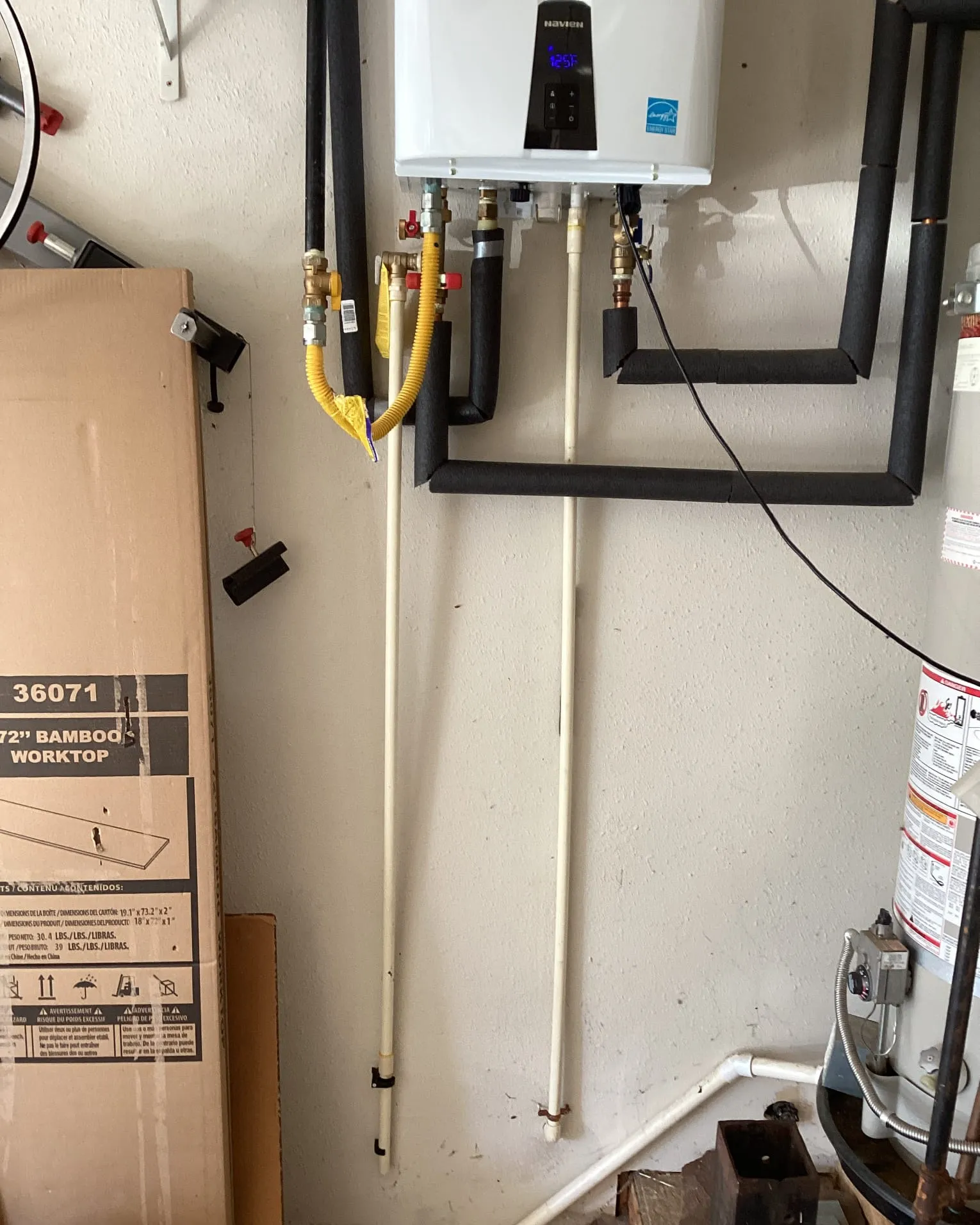
Insulate exposed pipes in crawl spaces, attics, garages, and along exterior walls. Foam pipe sleeves are cheap and easy to install. They make a real difference for the pipes most exposed to cold air.
Seal drafts around your home’s exterior, including gaps near where pipes enter the house. Cold air finding its way into a crawl space or wall cavity often turns a mildly cold night into a frozen pipe.
Keep your home heated to at least 55 degrees Fahrenheit, even if you are away. This is not just a prevention tip. It is often a requirement for insurance coverage if a pipe bursts while you are out of town.
Open cabinet doors under sinks during a hard freeze so warmer household air can reach the pipes underneath, especially for sinks located on exterior walls.
Let faucets drip slightly during extreme cold. A small trickle of moving water is less likely to freeze than water sitting still in a pipe.
If you are leaving town during a cold spell, ask a neighbor or friend to check on your home, or consider a smart leak sensor that can alert you to a problem before it becomes a major one.
Not always. If the pipe is exposed in a crawl space, basement, or garage, a plumber can often reach and repair it directly. Pipes inside walls or under flooring may require opening up part of the structure to access the damage.
Pipes become vulnerable once outdoor temperatures drop below roughly 20 degrees Fahrenheit, though poor insulation or strong wind chill can cause issues at somewhat higher temperatures too.
Usually yes, as long as reasonable preventive steps were taken. Coverage generally requires maintaining a minimum indoor temperature, often 55 degrees, even when the home is unoccupied. Most policies do not cover the cost of the pipe repair itself, only the resulting water damage.
Yes, a slight drip keeps water moving through the pipe, which makes freezing less likely, especially for pipes in exposed or unheated areas.
Shut off your main water valve immediately to stop the flow of water, then document the damage before starting cleanup.
Pipes in unheated crawl spaces, garages, exterior walls, and under sink cabinets are the most common trouble spots for homes in our region.
Even a small crack can release a significant amount of water quickly, since a pipe under pressure keeps flowing until the water is shut off. Left unaddressed, that water can damage flooring, drywall, and insulation, and create conditions for mold to develop.
Yes. Insulation is inexpensive and only needs to be installed once, while the cost and disruption of repairing a burst pipe and the resulting water damage is far higher. A small upfront investment protects against an occasional but genuinely costly event.
Simpson Plumbing & Filtration has served Vancouver, Camas, and the surrounding communities since 1981. If you have a burst pipe, we come out to assess the damage, explain what repair is needed, and give you an honest, upfront estimate before any work begins.