How To Know If You Have Hard Water: 6 Signs to Check Today
Cloudy glassware, crusty faucets, and soap that will not lather. Here are the six signs of hard water, how to…


If your water heater is on its way out, you have probably run into two very different options: a tankless water heater or a traditional tank water heater. Both get the job done, but they work in completely different ways. That difference between tankless vs tank water heaters affects cost, energy use, and how much hot water your home can actually handle at once.
This guide breaks down how each type of water heater works, the real pros and cons of each, and how to figure out which one makes sense for your household.
A traditional tank water heater is the type most homes have had for decades. It works by heating and storing water in a large insulated tank, ready to use whenever you turn on the hot water. Tank water heaters typically hold anywhere from 30 to 80 gallons of water, depending on household size and hot water demand.
Cold water enters the tank, gets heated to your set water temperature, and stays there until you need it. The tank keeps that water hot around the clock. This means it is always ready, but it also means the system uses energy to maintain that temperature even when no one is using hot water. This ongoing energy use is called standby heat loss. It is one of the main trade-offs of a storage tank system.
Most homeowners never think about standby heat loss until they see it explained, but it adds up. A tank that holds hot water all day and all night, even during hours when the house is empty, is spending energy the whole time just to keep that water warm.

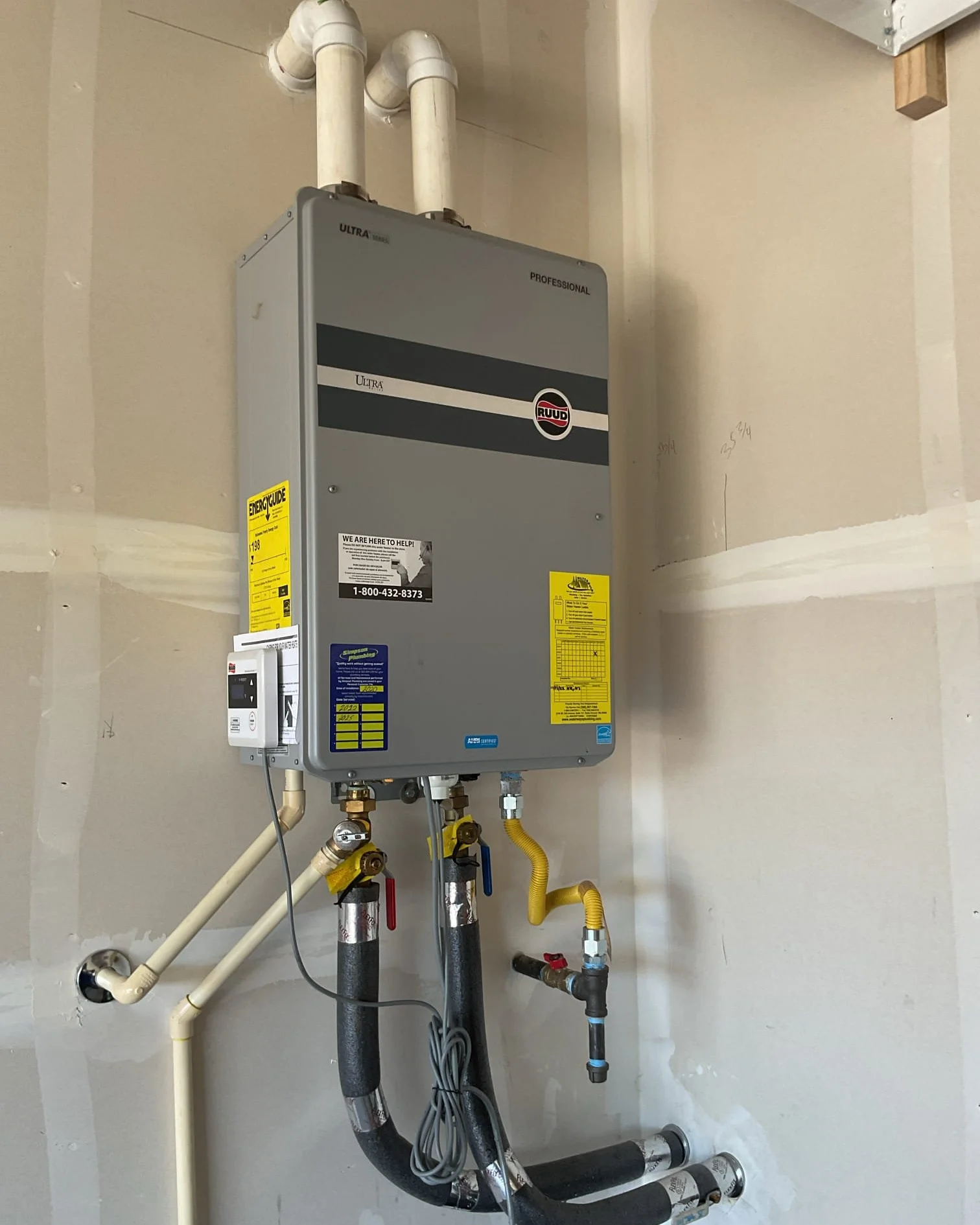
A tankless water heater takes a completely different approach. Instead of storing hot water, it heats water on demand as it flows through the unit. That is why tankless units are sometimes called demand water heaters.
When you turn on a hot water tap, cold water flows through the tankless unit and passes over a heat exchanger, which heats the water instantly as it moves through. There is no tank storing water, and no standby heat loss, since the system only uses energy when hot water is actually being used. This is a big part of why tankless systems are generally more energy efficient than tank models.
Because there is no tank to run out, a tankless water heater can provide a continuous hot water supply for as long as you need it, as opposed to a tank system, which can run cold once its stored water is used up.
This makes tankless water heaters a popular choice for households that use a lot of hot water back to back, like larger families running showers one after another in the morning. Instead of waiting for a tank to reheat, the next person in line still gets hot water on demand.
A few factors matter most when comparing tankless vs tank water heater options.
Flow rate is one of the biggest differences. A tankless system’s output is limited by its flow rate, meaning how many gallons per minute it can heat at once. If your household regularly runs a shower, dishwasher, and washing machine at the same time, you may need a larger tankless unit, or even two, to keep up. A tank system does not have this issue, since it stores a set amount of hot water ready to use, though it can run out if demand exceeds the tank’s capacity.
Upfront cost also differs quite a bit. Tank water heaters typically cost less to purchase and install than tankless units. Tankless systems often require updated gas lines or electrical work to handle their higher demand, which adds to installation cost. Over time, though, the energy savings from a tankless system can help offset that higher upfront cost.
Lifespan favors tankless units. A well-maintained tankless water heater often lasts 20 years or more, compared to 8 to 12 years for a typical tank system. That longer lifespan is another factor worth weighing against the higher initial cost.
Space is another consideration. Tankless units are compact and mount on a wall, freeing up floor space compared to a bulky storage tank. For homes with limited utility room or basement space, that difference can matter more than people expect.
Recovery time is worth mentioning too. A tank system that runs out of hot water needs time to reheat before it can supply more, sometimes 30 minutes or longer depending on the tank size and how much cold water just entered it. A tankless system does not have this limitation, since it heats water continuously rather than depleting a stored supply.
Tank water heaters:
Tankless water heaters:
The right choice depends on your household’s hot water habits and budget. A larger household that frequently runs multiple hot water fixtures at once may find a well-sized tank system, or a properly sized tankless system built for higher flow rate, works best. A smaller household or one focused on long-term energy savings may lean toward tankless, especially if existing gas lines and electrical service can support it without major upgrades.
Climate plays a role too. In colder regions, incoming water starts out colder, which means a tankless unit has to work harder to reach your set water temperature. This can reduce its effective flow rate compared to the same unit installed somewhere with warmer groundwater. A professional plumber accounts for this when sizing a system for your specific home rather than using a generic recommendation.
If you are unsure which type of water heater fits your situation, a professional plumber can look at your home’s hot water usage, existing setup, and budget to help you decide, rather than guessing based on general advice alone.
It usually comes down to home setup, not the technology itself. Homes without adequate gas lines or electrical capacity may need costly upgrades to support a tankless system, which can make a tank system the more practical choice for that specific home.
Neither is universally better. Tankless systems offer efficiency and continuous hot water but cost more upfront. Tank systems cost less initially and handle simultaneous demand well, but use more energy over time and have a shorter lifespan.
The main downsides are higher upfront cost, potential need for gas line or electrical upgrades, and flow rate limits during periods of very high simultaneous hot water use.
In most cases, yes, as long as the tankless unit is sized correctly for your household’s peak hot water demand. A properly sized tankless system can supply as much hot water as a traditional tank, just without the storage.
Cost varies based on whether your home needs updated gas lines or electrical work to support the new system. Tankless installation typically costs more upfront than a tank system, though many homeowners offset that over time through energy savings.
Often yes, thanks to eliminating standby heat loss and a longer typical lifespan. The exact savings depend on your household’s hot water usage and local energy costs.
Whichever type of water heater fits your home, Simpson Plumbing & Filtration can help you weigh the tradeoffs and handle the installation. Call (360) 325-4646 to talk through your options.