How To Know If You Have Hard Water: 6 Signs to Check Today
Cloudy glassware, crusty faucets, and soap that will not lather. Here are the six signs of hard water, how to…



A water softener is not a set-it-and-forget-it appliance. Like most home systems, it needs a little attention to keep working the way it should. The good news is that maintaining your water softener does not take much time. Staying on top of it can add years to the life of your system while keeping your water quality consistent.
This guide covers the maintenance tasks that matter most, how often to do them, and the warning signs that mean it is time to call in professional help.
If you have a traditional salt-based softener, salt is what makes the whole system work. Checking salt levels regularly, ideally once a month, helps the system keep running its regeneration cycles the way it was designed to. It only takes a minute to lift the lid and take a look.
Keep the brine tank at least a quarter full at all times. Letting it run too low means the system cannot properly regenerate the resin beads that reduce hardness minerals from your water. You will start to notice hard water symptoms creeping back in.
Use quality salt made specifically for water softeners. Cheaper rock salt often contains impurities that build up in the tank over time, leading to more frequent cleaning and a higher chance of problems down the road. Pellet or nugget forms of softener salt generally dissolve more evenly and cause fewer issues than block salt.
Salt bridges are one of the most common water softener problems. Many homeowners do not realize one has formed until their water goes hard again. A salt bridge occurs when a hardened crust forms above the water level inside the brine tank. This is usually caused by humidity, temperature changes, or letting the tank run low before refilling.
When salt bridges occur, the salt on top looks full. But a gap forms underneath between the crust and the water. The system cannot draw brine properly, even though the tank appears stocked. This is different from salt mushing, where salt breaks down into a thick sludge at the bottom of the tank instead of dissolving normally. Both problems stop your softener from regenerating correctly.
If you notice a hard, crusty layer when checking your salt levels, break it up carefully with a broom handle or similar tool. If salt mushing has occurred, the tank usually needs a full cleaning to clear out the sludge before the system can work properly again.
Brine tank cleaning once a year helps prevent both salt bridges and salt mushing before they become bigger problems. Over time, sediment, hardened salt, and mineral buildup can accumulate at the bottom of the tank, reducing efficiency and putting extra strain on the system.
To clean the tank, you will need to remove any remaining salt, wash out the tank with warm water, and let it dry before adding fresh salt back in. This is also a good time to inspect the tank for cracks or damage that might not be obvious during regular use.
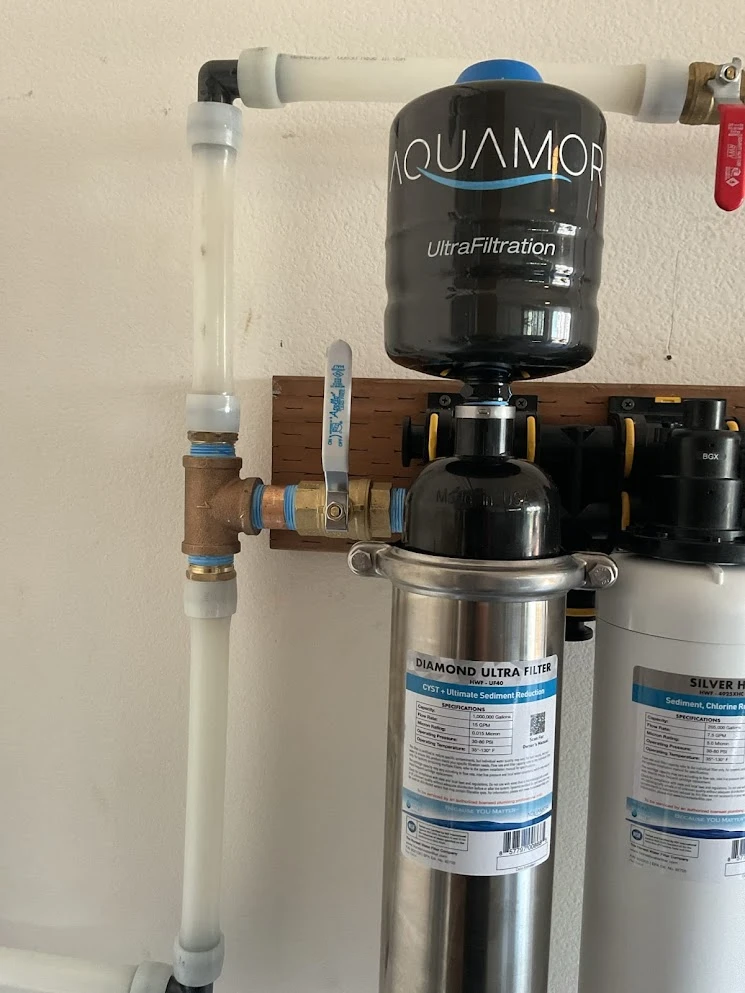
The resin beads inside your softener are what actually reduce calcium and magnesium from your water during each regeneration cycle. Over years of use, resin beads can wear down or become fouled by iron or sediment. This reduces the system’s softening capacity even if everything else looks fine.
If you notice your water hardness returning despite normal salt levels and a clean brine tank, worn resin beads could be the cause. This is generally something a professional needs to evaluate. Diagnosing resin bed issues usually requires testing rather than a visual check.
The bypass valve is worth checking too. This valve lets water bypass the softener entirely, which is useful during maintenance or repairs. Make sure it moves smoothly and seals properly when tested, since a stuck or leaking bypass valve can cause bigger issues down the line.
A few signs point to a water softener that needs attention sooner rather than later:
Catching these signs early usually means a simple fix. Left alone, they tend to lead to bigger repairs or a system that needs full replacement sooner than it should.
Basic tasks like checking salt levels and breaking up minor salt bridges are manageable for most homeowners. But issues involving the resin bed, persistent salt mushing, or a system that is not regenerating properly are worth a professional water softener maintenance visit. A trained technician can test your water, inspect the internal components, and catch problems that are easy to miss from the outside.
Regular maintenance helps keep your water softener operating as intended and can help protect your investment in the system.
If reading through all of this maintenance sounds like more upkeep than you want to deal with, it is worth knowing about salt-free conditioning systems. These are not the same as traditional water softeners. A traditional softener reduces the hardness minerals in your water, which is why it needs salt and regeneration cycles. Most salt-free conditioners work differently: instead of reducing measured hardness, they change how those minerals behave so they are less likely to form scale on fixtures, pipes, and appliances. Because there is no brine tank or regeneration cycle, there is no salt to buy, no tank to clean, and no risk of salt bridges or mushing. It is a different approach worth considering, especially if scale is your main concern and the maintenance side of a traditional softener is what has been holding you back.
Every home is different, and the right system depends on your water, your budget, and how much upkeep you actually want to take on. Talking it through with a professional is the easiest way to figure out which path fits your household.
Yes. Traditional salt-based softeners need regular salt checks, occasional brine tank cleaning, and periodic inspection to keep working properly and maintain water quality.
Basic tasks like checking salt levels and clearing minor salt bridges are manageable for most homeowners. More involved issues, like resin bed problems or persistent regeneration failures, are best left to a professional.
Most water softeners last 10 to 15 years with regular maintenance. Neglecting maintenance can shorten that lifespan considerably.
At minimum, checking salt levels monthly and cleaning the brine tank once a year. Homes with heavier water use or harder water may benefit from more frequent attention.
Skipped maintenance often leads to salt bridges, salt mushing, or resin bed wear, all of which reduce the system’s ability to soften water and can shorten its overall lifespan.
Simpson Plumbing & Filtration can help with everything from professional maintenance visits to talking through whether a salt-free conditioning system might be a better fit for your home. Call (360) 325-4646 to schedule a visit or ask questions about your current system.