How To Know If You Have Hard Water: 6 Signs to Check Today
Cloudy glassware, crusty faucets, and soap that will not lather. Here are the six signs of hard water, how to…


It depends on your water. A water softener addresses hardness, meaning high levels of minerals like calcium and magnesium. A water filter addresses taste, odor, and other water quality issues like chlorine or chloramine. The water softeners vs water filters question comes up constantly, and the honest answer is that they solve different problems.
Some homes in Vancouver, Camas, and Portland may benefit from both water filtration and softening, since the two address different concerns. Here’s how to tell which one your home actually needs.
A water softener treats hardness through a process called ion exchange. Hard water passes through a resin bed. The resin swaps calcium and magnesium ions for sodium ions, leaving the water noticeably softer. Hardness is what causes soap scum on shower doors, scale buildup in pipes and appliances, and spots on dishes and glasses. Softening addresses those specific issues well. It doesn’t touch chlorine taste, sediment, or other water quality concerns, since that’s simply not what it’s built for.
We also offer salt-free conditioning for homes dealing with hard water. It works differently from a traditional ion-exchange softener: instead of reducing the hardness minerals, salt-free conditioning is designed to help control scale, and it does not add sodium to your water. Which approach makes more sense depends on your water hardness level and your household’s needs.
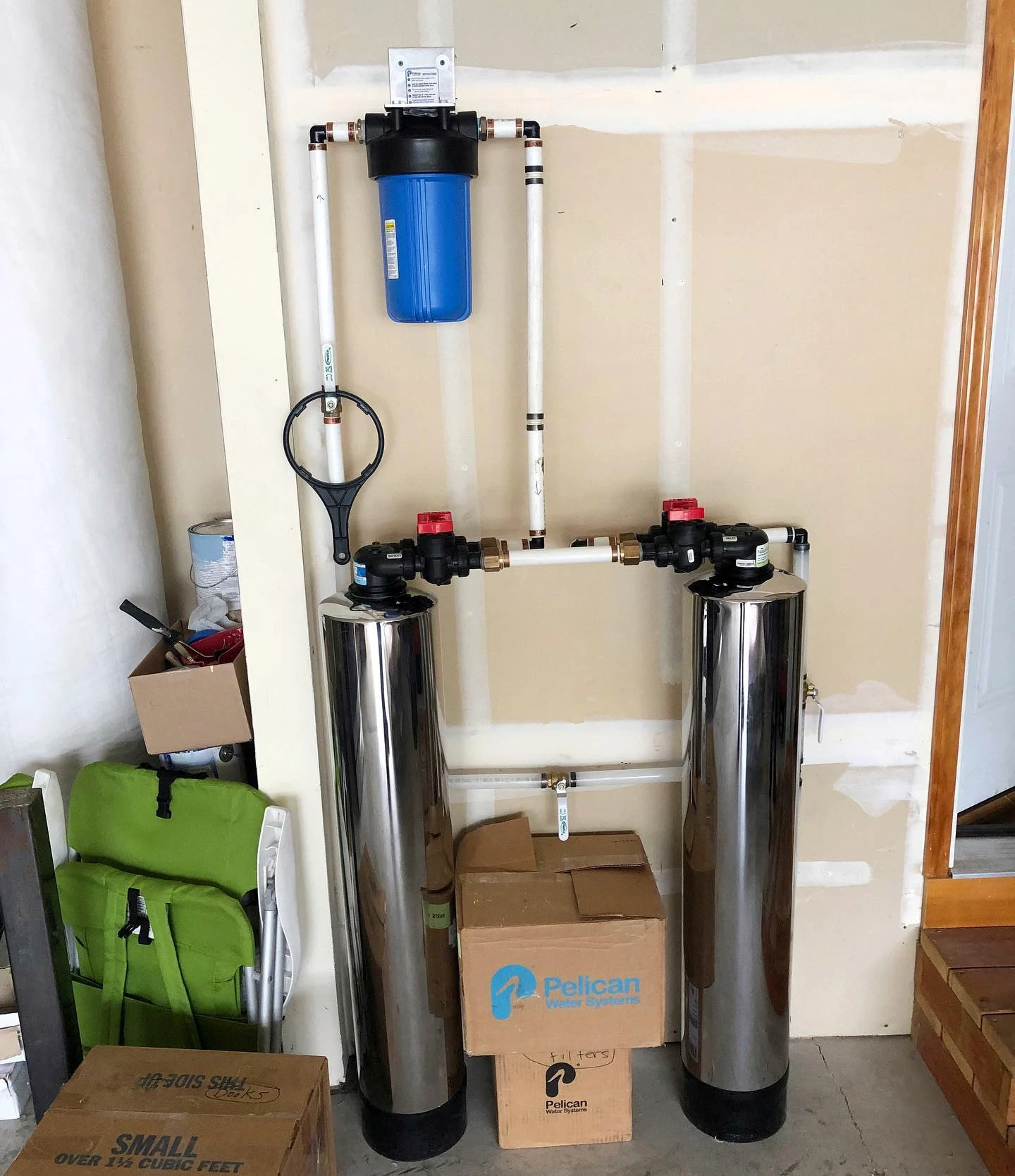
A whole-home water filtration system is a different tool. It solves a different problem. Water filters reduce contaminants, chlorine taste and odor, sediment, and in some cases specific compounds flagged in your local water quality report. Some water filtration systems use activated carbon. Others, like reverse osmosis, filter water through a fine membrane to reduce a broad range of contaminants, usually at a single tap. Carbon and sediment filtration does not address hardness. Minerals like calcium and magnesium pass through that kind of media largely untouched.
This is the core difference. Softeners change your water’s mineral content. Filters reduce what’s dissolved or suspended in it. They’re solving separate water issues, not competing versions of the same fix.

A few quick questions point you in the right direction:
There’s no universal answer. It genuinely depends on your water, which is why we start every conversation by looking at your actual conditions rather than selling a one-size-fits-all water treatment package.
Before recommending either system, we start with a Free Home Water Review, because it pays to know your water before deciding what to do about it. We look at your utility’s published water quality report for your ZIP code, which often lists hardness along with the disinfectant your utility uses, and talk through what you’re seeing at home, like spotty dishes, scale on fixtures, or a chlorine smell. We also look at your plumbing in person. Together, that usually makes it clear whether hardness, taste and odor, or both are behind what you’re noticing.
The review is educational, not an automatic lab or contaminant test. If a specific contaminant is a concern, we can talk through whether targeted testing makes sense. Either way, you’ll come away with a clearer sense of your options, and there’s no obligation to buy a system.
Simpson Plumbing & Filtration has served Vancouver WA, Camas, and Portland OR since 1981, matching real solutions to real water conditions, not a one-size answer.
No, not typically. Softeners reduce hardness minerals through ion exchange. They aren’t built to reduce contaminants such as chlorine or sediment, which is a filtration system’s job.
Traditional softeners add a small amount of sodium to your water and require periodic salt refills. Salt-free conditioning systems avoid the salt and added sodium, but they work differently: they help control scale rather than reducing hardness minerals the way a traditional softener does.
A softener, not a filter, is the right tool for hardness. Filtration systems don’t meaningfully address calcium and magnesium, since reducing those minerals requires ion exchange or a similar process, not carbon filtration. Salt-free conditioning is another option if your main goal is scale control rather than softer water.
It depends on the home. When both systems are installed, the right order depends on your water conditions, your treatment goals, how the system is designed, and the manufacturer’s requirements for each piece of equipment. That’s something we work out for your specific setup rather than following one universal rule.
Rarely, and not well. A few combination units exist. But a dedicated softener paired with a dedicated filtration system, sized correctly for your water, often works better than an all-in-one compromise.
Most people can drink softened water without issue, though it does contain some added sodium. If sodium intake is a specific concern for your household, salt-free conditioning or a reverse osmosis system at the kitchen tap are both reasonable alternatives.
Softening and filtration solve different water issues, and the right answer for your home depends on what your water actually needs, not a generic recommendation. If you want a straight answer instead of a sales pitch, request a Free Home Water Review and we’ll help you sort out which option fits your home.