How To Know If You Have Hard Water: 6 Signs to Check Today
Cloudy glassware, crusty faucets, and soap that will not lather. Here are the six signs of hard water, how to…


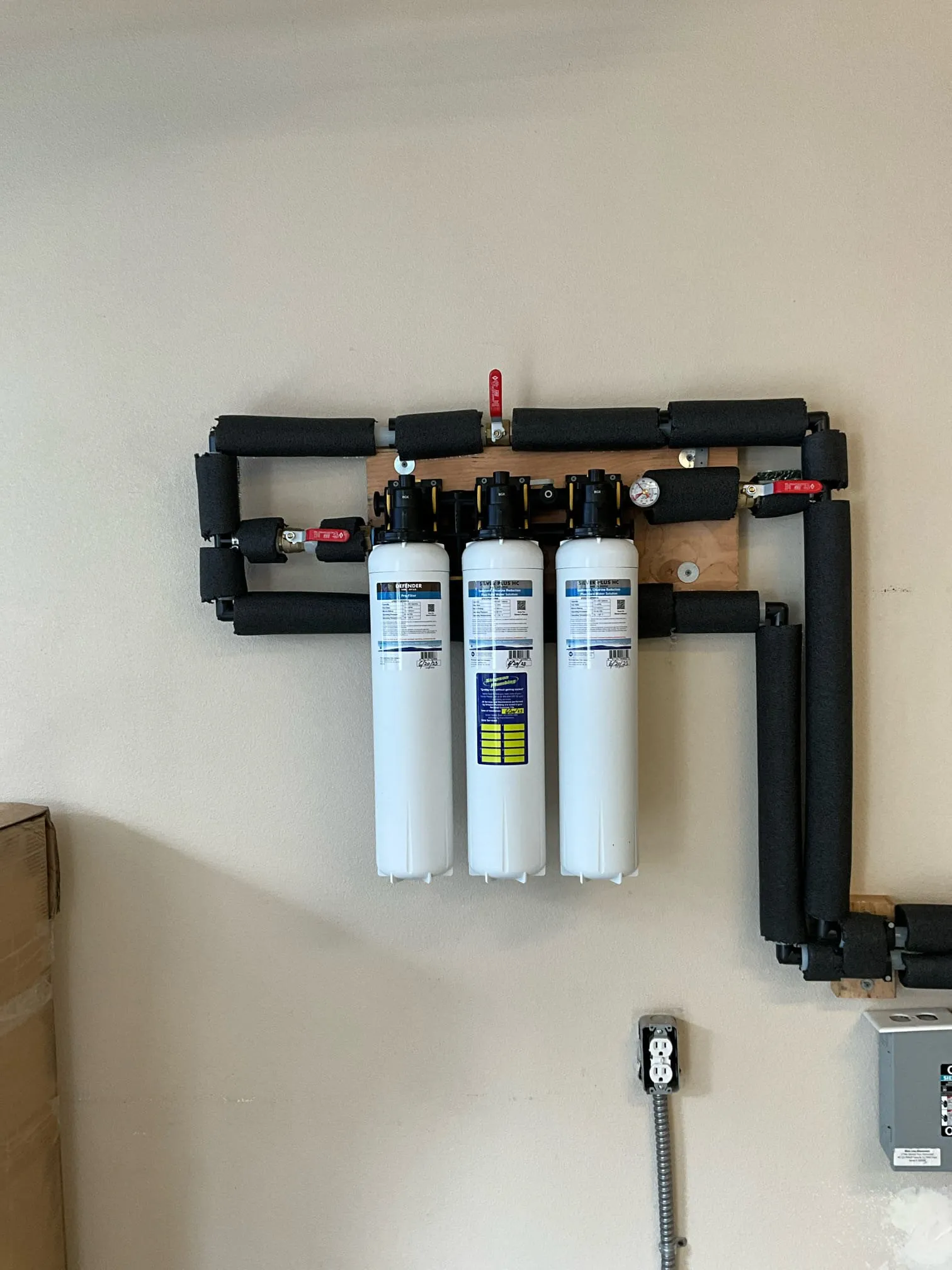
If you have ever filled a pitcher filter in the kitchen while every other tap in the house went untreated, you have already run into the limits of point-of-use filtration. A whole-home water filtration system takes a different approach. Instead of treating water at one spot, it treats water at the point where it enters your house. Every faucet, shower, and appliance gets the same clean water.
This guide explains how whole-home filtration actually works, how it compares to a pitcher filter, and what it can and cannot do for your water quality.
A whole-home filtration system installs at your main water line. This is the point where water first enters your house. From there, every fixture in your home draws from already-filtered water. That includes your kitchen sink, your shower, your washing machine, and even your outdoor hose bibs.
Most systems use a combination of filtration stages. A sediment filter typically comes first. It reduces dirt, rust, and fine particles. A carbon filter usually follows. It reduces chlorine, improves taste and odor, and addresses some organic compounds. Depending on the system, additional stages may target specific concerns, like sediment from well water or general water hardness.
Because everything runs through one central system, whole-home filtration is largely hands-off day-to-day. There is no pitcher to refill. There is no cartridge to remember at the sink. Maintenance happens on a set schedule instead. Most systems need a filter change every several months to a year, depending on the system and your water usage.
A pitcher filter is inexpensive and easy to try. That is why so many households start there. But it comes with real limits worth understanding.
Coverage is the biggest difference. A pitcher filter treats only the water you pour into it. Every other tap in your home (shower, dishwasher, bathroom sink) still delivers unfiltered water. A whole-home system treats water at every single point of use. You never have to think about it.
Capacity matters too. Most pitcher filters hold somewhere between six and ten cups. They need refilling constantly in an active household. A whole-home system handles your entire home’s water demand without any manual refilling at all.
Filtration depth is another factor. Pitcher filters generally use a basic carbon filter. This helps with taste and odor but has limited capacity to handle sediment or higher volumes of water. Whole-home systems typically use multiple filtration stages. This gives them a broader range of what they can address, plus the durability to handle constant use.
Cost works out differently too. A pitcher filter costs little upfront, but replacement cartridges add up over time, and they are a recurring purchase you have to remember. A whole-home system costs more to install initially. Ongoing maintenance is a scheduled filter change rather than a constant cycle of small purchases.
None of this means a pitcher filter is a bad option. For a single person filtering drinking water only, it can be perfectly reasonable. The comparison just depends on how much of your home’s water you actually want treated, and how much manual upkeep you want to deal with.
Whole-home systems are generally built to reduce chlorine, sediment, and compounds that affect taste and odor. Depending on the specific system and filtration stages included, they can also help with certain organic compounds and general water quality issues common in both municipal and well water.
It is worth being clear about what whole-home filtration is not. It is not the same as reverse osmosis. Reverse osmosis uses a semi-permeable membrane to reduce a much wider range of contaminants. That includes dissolved solids and heavy metals. It typically works at just one point of use, like a kitchen faucet. Whole-home filtration and reverse osmosis solve different problems.
Many households use both together. Whole-home filtration covers water quality throughout the house. A dedicated reverse osmosis system delivers the highest level of filtration right at the kitchen tap.
A few signs suggest it might be time to consider something bigger than a pitcher:
If several of these sound familiar, a whole-home system addresses the underlying coverage problem. It does not just ask you to manage it manually at one sink.
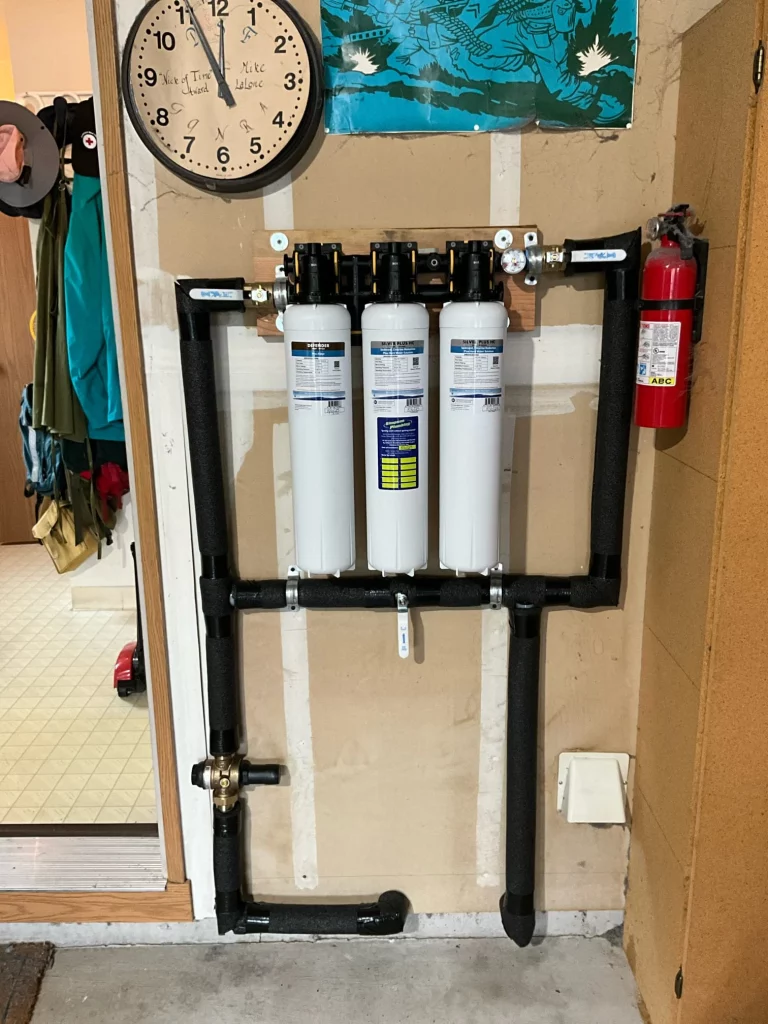
Think about how much water actually passes through your home in a given week. Showers, laundry, dishwashing, cooking, and drinking all draw from the same supply line. A pitcher only ever touches a small fraction of that total. Treating water right where it enters the house means every single one of those uses benefits. It is not just the glass you fill at the sink.
For many households, that broader coverage is the real reason to make the switch. Once it is installed, you stop thinking about filtration at all, since it is simply built into how water reaches every fixture.
For households that want consistent water quality at every tap, not just one sink, yes. It reduces the daily upkeep of a pitcher filter and covers water used for showering, laundry, and appliances in addition to drinking and cooking.
The right system depends on your specific water quality. A water test identifies what is actually in your water, whether that is chlorine, sediment, or something else. The filtration stages installed can then address your actual situation rather than a generic setup.
The main tradeoff is upfront cost and installation compared to a pitcher filter. Whole-home systems also require periodic filter changes on a set schedule, though this is generally less hands-on maintenance than refilling and replacing a pitcher cartridge regularly.
In most cases, yes. It treats the same water a pitcher would, along with every other tap in the house. Some households still keep a pitcher for convenience, but it is no longer doing the heavy lifting once whole-home filtration is in place.
No single system reduces everything. Whole-home filtration typically addresses chlorine, sediment, and taste and odor issues. For a broader range of contaminants, including dissolved solids, a dedicated reverse osmosis system at the kitchen tap is usually paired alongside whole-home filtration rather than replacing it.
This varies by system, but most need a filter change every six months to a year. A water test and a look at your household’s usage helps determine the right schedule for your specific setup.
If you are ready to move beyond refilling a pitcher and want water quality that reaches every tap in your home, Simpson Plumbing & Filtration installs whole-home filtration systems built around what your water actually needs. Call (360) 325-4646 to schedule a water review.