How To Know If You Have Hard Water: 6 Signs to Check Today
Cloudy glassware, crusty faucets, and soap that will not lather. Here are the six signs of hard water, how to…



Weak water pressure in your home can turn a simple shower or a load of dishes into a frustrating chore. The good news: low water pressure usually has an identifiable cause. Once you know what to look for, diagnosing the issue is usually straightforward.
This guide walks through seven common causes of low water pressure and how to figure out which one is affecting your home. Working through them in order can save you a lot of guesswork.
One of the simplest causes of a water pressure issue is a valve that is not fully open. Your home has a main shut-off valve, and often a secondary valve near the water meter, that controls water flow into your entire plumbing system. If either valve was recently touched, during a repair, a renovation, or even by accident, it might not be fully open.
Check whether the main shut-off valve appears to be fully open. On a ball valve, the handle runs parallel to the pipe when the valve is open. If the valve is old, difficult to turn, leaking, or appears damaged, avoid forcing it and have a plumber inspect it. This is worth checking first, since it only takes a minute to look and can rule out one of the simplest causes.
A pressure regulator, sometimes called a PRV, controls how much pressure enters your home from the municipal water supply. Cities often deliver water at a pressure too high for household plumbing. The regulator brings it down to a safe, usable level, usually between 40 and 60 psi.
When a pressure regulator starts failing, it often causes pressure to drop rather than spike. Worn parts can restrict flow instead of controlling it properly. A faulty pressure regulator is one of the most common causes of a home’s water pressure dropping across every fixture at once, rather than just one.
If you suspect this is the issue, a plumber can test the pressure at your regulator and compare it to the pressure elsewhere in your home. A noticeable difference usually points straight to the regulator. Replacing a failing PRV is a fairly routine repair, and it often solves whole-house pressure problems that other fixes cannot touch.
Sometimes low water pressure has nothing to do with your home at all. Water main repairs, high demand during peak hours, or maintenance work happening somewhere in your municipal water supply can all cause a temporary drop.
If your neighbors are having the same issue, or the problem seems to come and go at certain times of day, this is worth ruling out before assuming the issue is inside your home. A quick call to your water utility can often confirm whether work is happening in your area.
Over time, mineral deposits can build up inside your pipes, gradually narrowing the space water has to flow through. This is especially common in homes with hard water, where calcium and magnesium collect on the inside walls of pipes and fixtures.
Mineral buildup tends to affect pressure gradually rather than all at once. That is part of why it often goes unnoticed until the drop becomes significant. If your home has hard water and pressure has declined slowly over months or years rather than suddenly, buildup inside your plumbing system is a likely cause. A water softener reduces the hardness minerals that cause scale, which can help limit new buildup going forward. Neither softening nor filtration clears scale that has already formed inside your pipes, though.
Homes with older galvanized steel plumbing are especially prone to pressure problems. Over decades, the inside of galvanized pipes corrodes and narrows, restricting water flow even though the pipe looks fine from the outside.
Corrosion is different from mineral buildup. Scale collects on the inside of a pipe, while corrosion is the pipe itself breaking down. Corroded galvanized steel pipes usually need full replacement to solve the issue, since water treatment cannot reverse that damage. If your home was built before the 1960s and still has its original plumbing, aging pipe material is worth considering as a cause. This is especially true if pressure affects the whole house rather than one fixture.
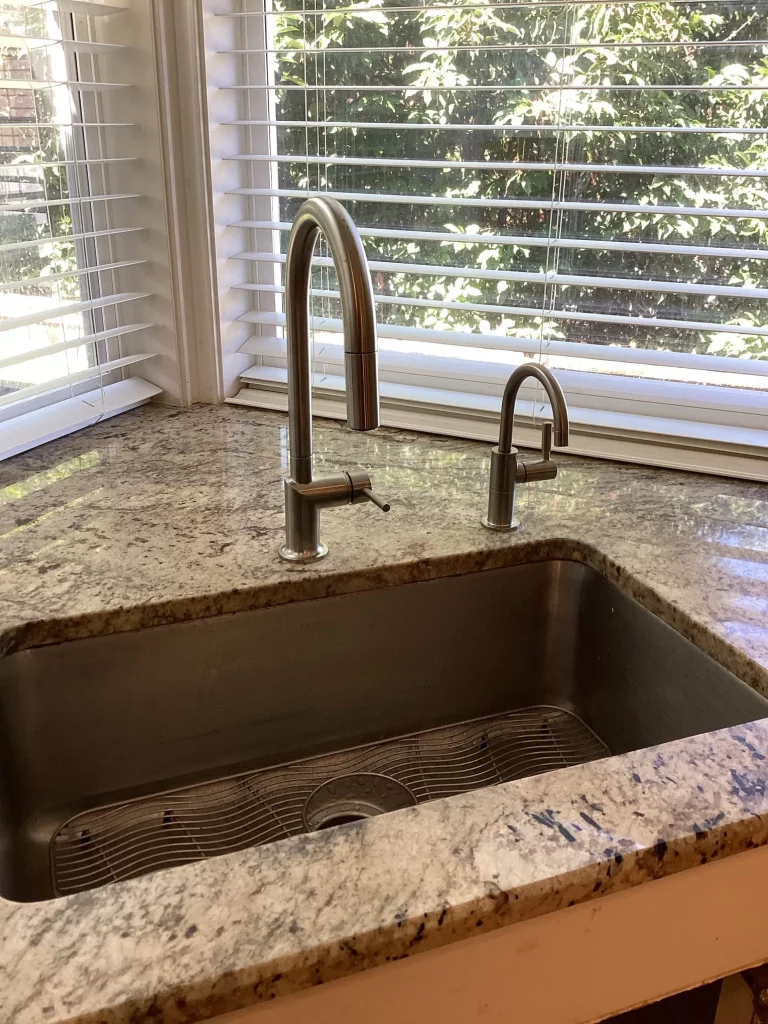
Not every pressure problem affects your entire home. Sometimes it is isolated to a single faucet or shower head, which usually points to a clog rather than a system-wide issue. Aerators and shower heads collect mineral deposits and debris over time, restricting flow at that specific fixture.
This is one of the easiest issues to diagnose and fix. Unscrew the aerator or shower head, soak it in a vinegar solution to dissolve mineral buildup, and rinse it clean before putting it back. If pressure improves at that one fixture, the clog was the cause.
A hidden leak elsewhere in your plumbing system can reduce pressure at your fixtures. Water escaping somewhere else means less reaching the tap you are using. Leaks often come with other signs too, like an unexplained rise in your water bill, damp spots, or the sound of running water when everything is off.
If you suspect a leak, professional leak detection can help narrow down and locate the source while minimizing unnecessary demolition. Repairing it typically restores pressure once the leak is fixed.
Start by checking whether the low pressure affects one fixture or the whole home. That single question narrows things down fast. A single fixture usually points to a clog. Whole-house pressure problems point toward a valve, a pressure regulator, mineral buildup, aging pipes, or a leak. From there, work through the causes in order. Start with the simplest checks, like valves, before calling in a professional.
Installing a water pressure gauge at an outdoor spigot gives you an actual reading to compare against the normal range. That makes diagnosing the issue much easier than guesswork alone.
Most homes should have water pressure between 40 and 60 psi. Pressure below 40 psi is generally considered low.
Yes. Since a pressure regulator controls water entering your entire home, a failing one often causes pressure to drop at every fixture rather than just one.
This usually points to a localized clog in a fixture, or a partial blockage in the pipe serving that area, rather than a whole-house issue like a regulator or valve problem.
Yes. Mineral deposits build up gradually inside pipes and fixtures. This narrows the space water can flow through and reduces pressure over time, especially in homes with hard water.
Some causes, like a partially closed valve or a clogged shower head, are simple enough to check yourself. Issues involving a pressure regulator, aging galvanized steel pipes, or a hidden leak generally require a professional to diagnose and repair correctly.
Simpson Plumbing & Filtration can help track down what is really causing your pressure problem and get it fixed the right way. Call (360) 325-4646 to schedule a diagnosis.