How to Handle a Sudden Drain Backup in Your Bingen, WA Home
A sudden drain backup in your Bingen, WA home demands immediate action to protect your family’s health, limit property damage,…


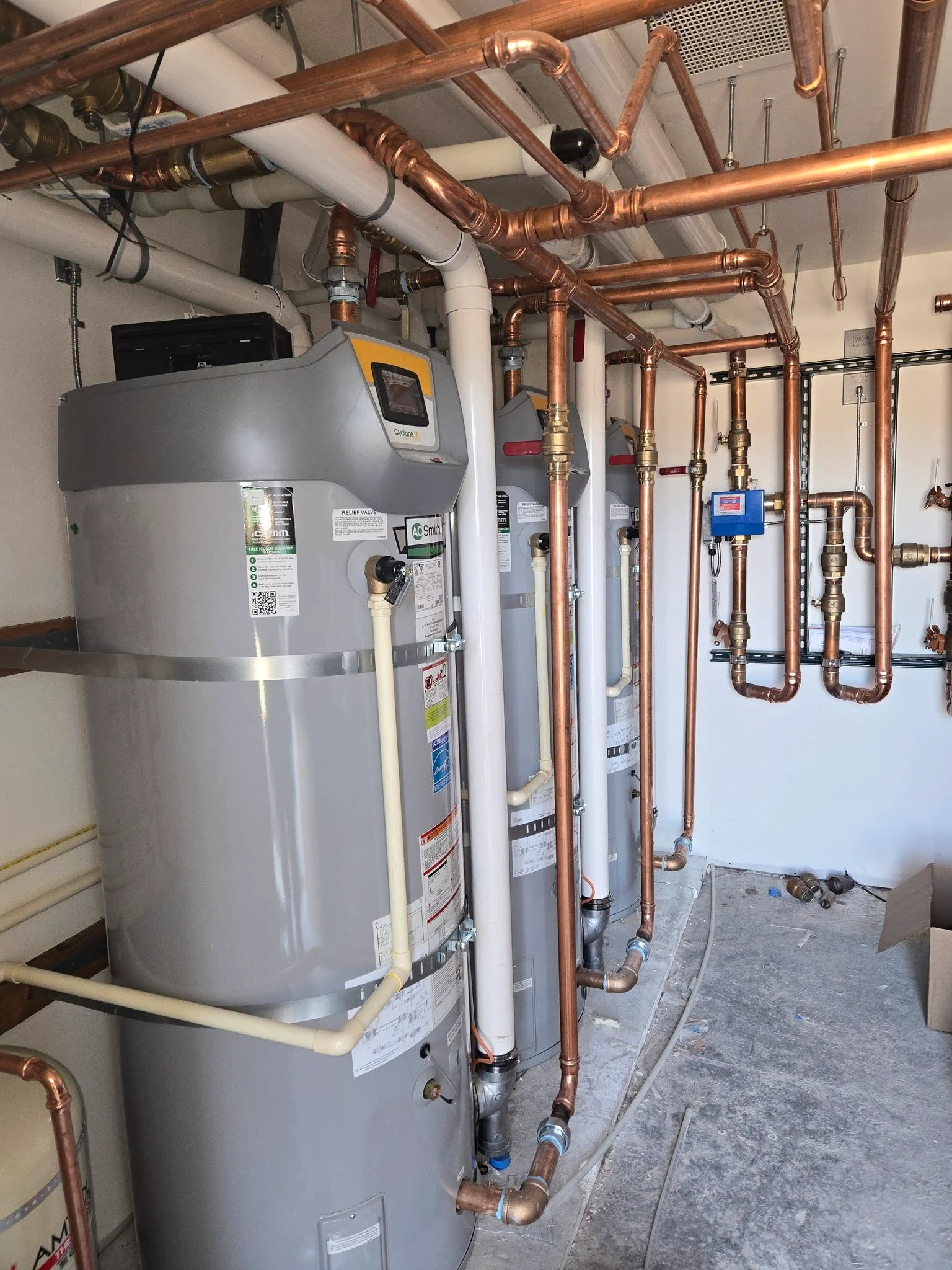
A gas 50-gallon water heater installed by a professional plumber in Vancouver, WA, typically costs between $3,583 to $4,655 for full-service installation, including the unit, labor, permits, and materials. Homeowners who take advantage of our membership pricing can see that range drop to $3,045.55 to $3,956.75. These costs cover the complete job from start to finish, with no hidden fees or surprise add-ons. Water heating accounts for about 18% of your home’s total energy use, making it the second largest energy expense in most households, according to the U.S. Department of Energy. That means choosing the right unit and getting it installed correctly matters for both your comfort and your monthly utility bills.
Here is what you can expect to pay for a 50-gallon gas water heater installed by Simpson Plumbing in Vancouver, WA:
| Pricing Tier | Low End | High End |
|---|---|---|
| Standard Pricing | $3,583.00 | $4,655.00 |
| With Membership | $3,045.55 | $3,956.75 |
The variation between low and high end depends on several factors, which we cover below. The difference between standard and membership pricing reflects a consistent 15% savings across all our water heater installations.
When you get a gas 50-gallon water heater installed by our team, the price covers:
This is a turnkey price. You will not get hit with separate charges for permits, materials, or disposal after the fact.
We offer several water heater options for Vancouver homeowners. Here is how the gas 50-gallon model stacks up against the alternatives:
| Water Heater Type | Standard Price Range | Membership Price Range | Best For |
|---|---|---|---|
| Gas 50 Gallon | $3,583 – $4,655 | $3,045.55 – $3,956.75 | Families of 3-4, reliable hot water, lower operating costs |
| Electric 50 Gallon | $3,543 – $4,543 | $3,011.55 – $3,861.55 | Homes without gas service have a slightly lower upfront cost |
| Tankless (Gas) | $4,864 – $9,677 | $4,134.40 – $8,225.45 | Unlimited hot water demand, smaller footprint, longer lifespan |
| Hybrid 50 Gallon | $5,436 – $7,509 | $4,620.60 – $6,382.65 | Maximum energy efficiency, eco-conscious homeowners |
Gas storage water heaters remain the most popular choice in the Pacific Northwest because natural gas is readily available and offers lower operating costs compared to electric resistance models. According to Wikipedia’s water heating overview, natural gas water heaters are the most common type in the United States due to gas being conveniently piped throughout cities and currently being the cheapest fuel source to use.
Several variables can push your installation toward the low or high end of the price range:
| Factor | Lower Cost | Higher Cost |
|---|---|---|
| Venting type | Existing atmospheric vent works | Needs a new power vent or PVC venting rerouted |
| Gas line | The existing line is adequate | Gas line upgrade or new run required |
| Location | Garage or accessible utility room | Tight crawlspace, attic, or difficult access |
| Code updates | Current setup meets code | New seismic straps, T&P discharge pipe, or expansion tank needed |
| Unit efficiency | Standard efficiency model | ENERGY STAR certified high-efficiency model |
| Old unit removal | Straightforward swap | Unit is wedged in, corroded, or requires special disposal |
Gas water heaters produce combustion gases that must be safely vented outside. If your current setup uses an atmospheric vent (a metal chimney-style flue) and it is still in good condition, that keeps costs down. If you need a power vent or direct vent system installed or rerouted, expect the price to land on the higher end.
Washington State follows the Uniform Plumbing Code, which includes specific requirements for water heater installations. These may include earthquake straps, temperature and pressure relief valves with proper discharge piping, and expansion tanks on closed water systems. Our team handles all of these requirements as part of every installation.
| Scenario | Home Type | Key Details | Estimated Cost |
|---|---|---|---|
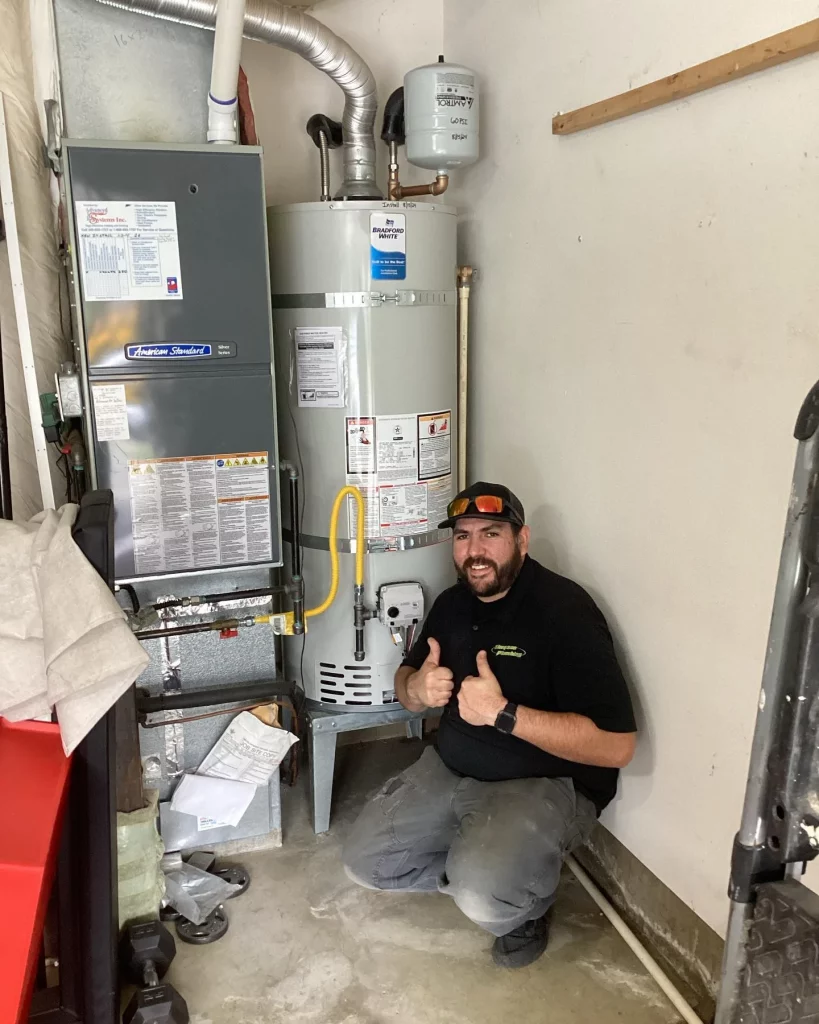
| Simple garage swap | Single-family, 3 bed | Old 50-gal gas replaced in open garage, existing vent and gas line reused | $3,583 – $3,900 |
| Utility closet upgrade | Townhome, 2 bed | Tight space, new seismic straps, minor gas line adjustment | $3,900 – $4,200 |
| Full venting replacement | Older home, 4 bed | The aging vent pipe was replaced with a power vent system, and an expansion tank was added | $4,200 – $4,655 |
| Code update install | Pre-1990 home, 3 bed | New T&P discharge line, seismic straps, gas valve upgrade | $4,000 – $4,400 |
This is a good fit if:
This may NOT be the right choice if:
Most homeowners do not think about their water heater until it fails. The problem is that storage water heaters tend to fail at the worst possible time, early morning before work, on a holiday weekend, or during a cold snap. When a tank ruptures, you are not just replacing a water heater. You are dealing with potential water damage, emergency service rates, and days without hot water.
According to the U.S. Department of Energy, storage water heaters typically last 10 to 15 years. If yours is approaching or past that mark, planning a replacement on your own schedule saves you money, stress, and the risk of property damage. A planned installation always costs less than an emergency call.
When you replace your water heater, choosing an ENERGY STAR certified model can reduce your energy consumption over the life of the unit. The ENERGY STAR program certifies gas storage water heaters that meet higher efficiency standards than federal minimums. These models typically use features like improved insulation, electronic ignition instead of standing pilot lights, and better heat exchangers.
The U.S. Department of Energy’s sizing guide recommends matching your water heater’s first hour rating to your household’s peak hour demand, not just buying the biggest tank available. A properly sized unit runs more efficiently and wastes less energy keeping water hot when you do not need it.
At Simpson Plumbing, our licensed plumbers have been installing gas water heaters for Vancouver, WA, homeowners for years. We pull the permits, handle the code requirements, and make sure your new unit is installed safely and correctly the first time. Every installation includes haul-away of your old unit and a thorough walkthrough of your new system. Call us at (360) 325-4646 or email [email protected] to get started.
Most gas storage water heaters last 10 to 15 years with proper maintenance. If yours is approaching that age, it is smart to plan a replacement before it fails unexpectedly.
Common signs include rusty water, rumbling or popping sounds, visible corrosion on the tank, water pooling around the base, or running out of hot water faster than usual.
Yes, water heater installations in Vancouver require a plumbing permit. Our team pulls all necessary permits as part of every installation, so you do not need to handle that yourself.
Yes, but it requires running a gas line and installing proper venting, which adds to the cost. We can evaluate your home and give you an honest assessment of what that transition would involve.
A 50-gallon gas water heater is typically the right size for a 3 to 4-person household. The key metric is the first-hour rating, which tells you how much hot water the unit can deliver during your busiest hour of use.