


Well water and municipal water are not the same. They do not need the same treatment either. If your home relies on a private well, the water coming out of your tap has never been tested or treated by a city utility. Whatever is naturally present in your groundwater stays in the water until you address it yourself.
That might be iron, sediment, hardness minerals, or something else entirely. Simpson Plumbing & Filtration installs well water filtration systems for homeowners throughout Vancouver, WA who want clean, reliable water straight from their well.
A few problems show up again and again in wells throughout our area.
Iron staining is one of the most common visible complaints. It shows up as orange or reddish stains on sinks, tubs, and laundry. Sediment is another frequent issue. This is especially true in older wells or after heavy rain, when dirt and fine particles can make their way into the water supply.
Hardness minerals like calcium and magnesium are common in well water too. They lead to scale buildup on fixtures and appliances over time. Some wells also develop a sulfur smell, often described as a rotten egg odor. This usually points to naturally occurring bacteria or dissolved gas in the groundwater.
None of these issues are necessarily dangerous, but they are worth addressing. Left alone, they can shorten the life of your plumbing, water heater, and appliances. They also make daily water use less pleasant than it should be. A load of laundry that comes out with rust stains, or a coffee maker that needs constant descaling, are the kind of everyday annoyances that add up over time.
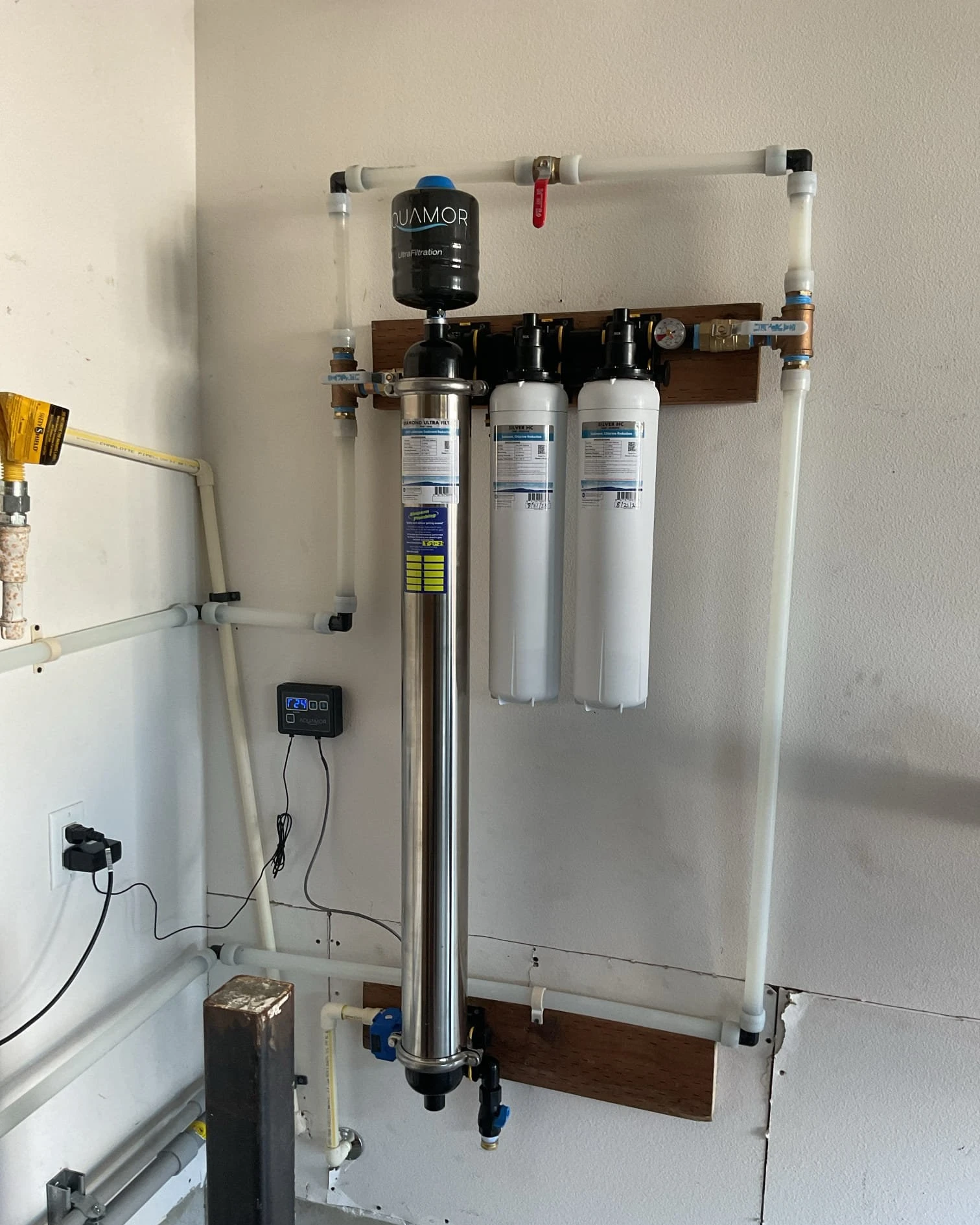
A well water filtration system treats water where it enters your home. That means every faucet, shower, and appliance gets the benefit, not just one sink. Most systems use a combination of stages to handle the range of issues well water can carry. This is different from a single countertop pitcher or a small under-sink filter, which only treats water at one location.
Sediment pre-filters are usually the first stage. They catch dirt, sand, and fine particles before water moves further into the system. This protects the rest of your plumbing and any additional filtration stages downstream. From there, a well water filter may include iron filtration to address staining, carbon filtration to improve taste and odor, and in some cases a water softener to handle hardness minerals.
The exact combination depends on what is actually in your water. A well that mainly deals with iron staining needs a different setup than one dealing with sulfur odor or sediment alone. This is exactly why testing comes before installation, not after.
Several types of treatment address different well water issues:
Many wells need more than one of these working together. A single water filter rarely solves every issue on its own. That is why a full system is usually the better long-term solution compared to a single point fix.
Before recommending any system, we test your water to see exactly what is present. Guessing at a solution based on symptoms alone can backfire. You might spend money on the wrong fix, or miss something a visible symptom does not fully explain.
Two wells in the same neighborhood can have very different results, depending on depth, geology, and how close they sit to other water sources. A water test gives us real numbers for iron, hardness, pH, and other factors. That way, the system we recommend actually matches your well.
If you have not had your well water tested recently, or ever, that is the right place to start. We offer a home water review that covers exactly this. It takes the guesswork out of choosing a system.
Private well water is unique to each property and can change over time. Unlike municipal water, a private well is not routinely treated or monitored by a public water provider. For that reason, we recommend starting with comprehensive water testing before selecting a filtration or treatment system.
Test the well water to understand what is actually present and determine the appropriate treatment. Depending on the property and local conditions, testing may include:
Additional testing may be recommended based on the property's location, well history, surrounding land use, or known local water concerns.
There is no single filtration system that is right for every well. Once testing is complete, treatment is designed around the home's actual water conditions.
Recommendations may include:
Good water quality isn't only about filtration. The well itself should be properly maintained. Homeowners should periodically inspect the wellhead and surrounding area, protect it from potential contamination sources, and have the well evaluated if there is a change in taste, odor, color, pressure or water quality.
Water should also be retested after flooding, well repairs, extended periods of non-use, or whenever contamination is suspected.
Test first. Treat second.
For homes on private wells, our goal is to understand the water before recommending equipment. Testing allows us to identify the concerns specific to the property and recommend a treatment approach designed around the home's water.
The result should be a water treatment plan that addresses the actual water coming into the home and provides the homeowner with greater confidence in the water they use every day.

Well water filtration systems typically install at the point where water enters your home. This is often in a utility room, basement, or garage. Installation time depends on how many treatment stages your system includes. A simple sediment and carbon setup can often be completed in a matter of hours. A more complete system addressing iron, hardness, and odor together may take a bit longer.
Once installed, most systems need periodic maintenance. Pre-filters and cartridges typically need replacement on a regular schedule. Any softening component will need occasional attention as well. We will walk you through exactly what your specific system needs before we leave. That way, there are no surprises down the road. Many homeowners find it easiest to fold this into an annual plumbing maintenance visit, so nothing gets forgotten between service calls.
Untreated well water issues tend to get worse over time, not better. Iron staining spreads. Sediment can speed up wear on fixtures and appliances. Hardness minerals build up scale inside your water heater and plumbing. This shortens their lifespan and reduces efficiency. Addressing these issues with the right filtration system protects those investments. It also makes daily water use noticeably better, from cleaner laundry to better tasting water at the tap.
A well water filter is not a one-time purchase you forget about. It is an ongoing part of keeping your home's water supply reliable, especially since well water can change over time as conditions in the ground shift.
For homes on private well water, we recommend testing the water at least once each year as part of routine home and well maintenance.
Because groundwater conditions can change throughout the year, more frequent testing—such as two to four times per year—may be beneficial for some properties, particularly in areas that experience significant seasonal changes.
Heavy rainfall, snowmelt, drought conditions, flooding and changes in the groundwater table can all influence the water entering a private well. Testing at different times of the year can provide a more complete picture of the home's water quality than relying on a single test taken at one point in time.
Additional testing should also be considered when:
Our recommendation: Establish an annual testing baseline and consider seasonal testing when the property or surrounding environment warrants it. Water quality can change, and regular testing helps ensure that any treatment or filtration system continues to address the water actually entering the home.
It depends on what is actually in your water. Most well water benefits from a combination of sediment filtration plus targeted treatment for iron, odor, or hardness based on your specific test results.
Cost depends on how many treatment stages your well needs and the size of your home. We provide an honest, upfront estimate after testing your water and understanding your specific situation.
The first step is testing to see what is actually present. From there, a combination of sediment filtration, iron filtration, carbon filtration, or softening addresses the specific issues found in your results.
Many well water issues, like iron, sediment, and hardness, are not typically dangerous but affect taste and appliance life. A water test can also check for anything that would specifically affect drinking water safety, so you know exactly where you stand.
Sediment pre-filters usually need replacement every few months, depending on usage and how much sediment your well produces. Other components vary based on the type of system installed. We provide a maintenance schedule specific to your setup.
Many well water systems benefit from both. Filtration addresses sediment, iron, taste, and odor. A softener specifically addresses hardness minerals. A water test tells us whether your well needs one, the other, or both.
We do not recommend it. Proper sizing and installation matter a lot for these systems, and a poorly installed unit can cause pressure issues or fail to treat your water correctly. A professional installation also comes with a clear maintenance plan.
If you are dealing with staining, odor, sediment, or you simply have not had your well water tested, Simpson Plumbing & Filtration is here to help. Call (360) 325-4646 to schedule your home water review and find out which well water filtration system fits your home.